Plumber San Diego is a free referral service, not a plumbing company, and it has no crews of its own to dispatch. Dial the number shown here, explain the problem, and the call is passed to an independent local plumber who works in San Diego or a neighboring county community. That plumber gives the price, sets the appointment and handles the repair.
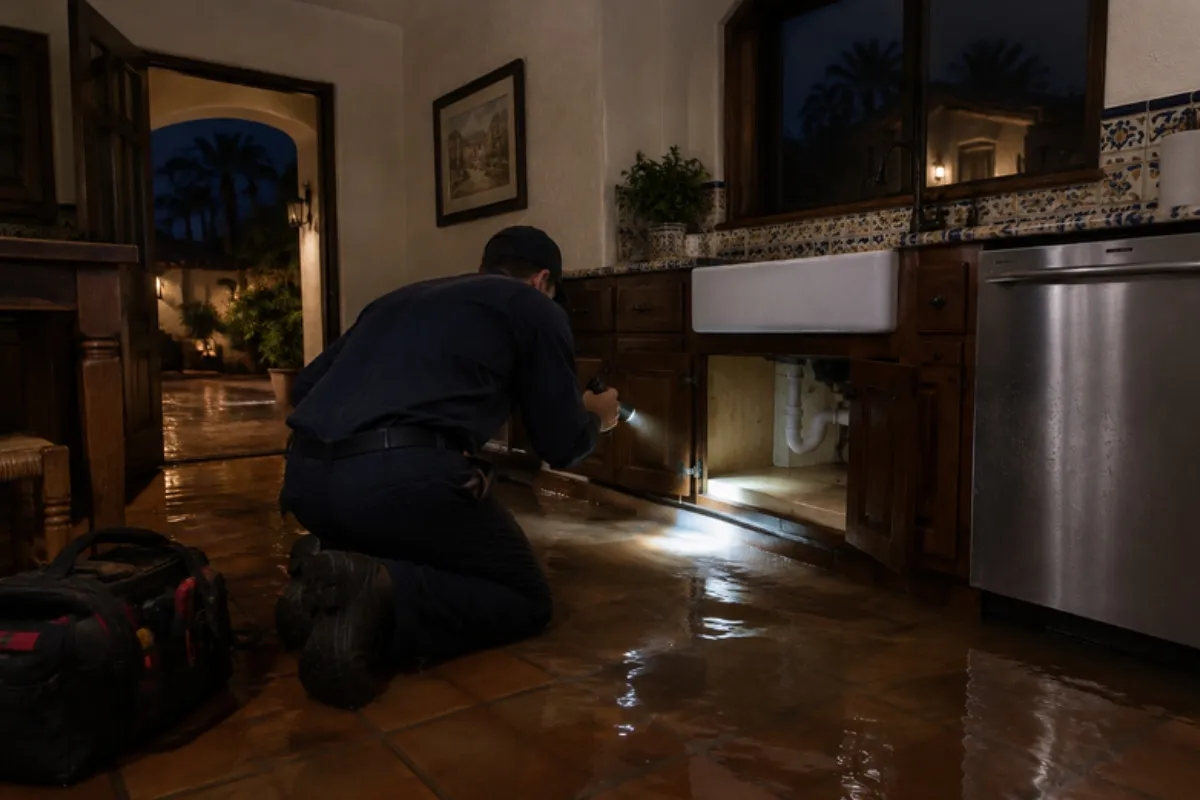
Plumbing services in San Diego
What happens when you call
Your call goes to an independent plumber who accepts work in your area of the county. Plumber San Diego has no plumbing staff and plays no part in pricing. Questions about the repair, the bill and the visit window are settled between you and the plumber you reach. When someone can arrive depends on that plumber's workload, so this site makes no promise about timing.
People reach out for help with urgent plumbing problems, clogged drains, broken sewer laterals, water heaters, slab leaks, softener installs, yearly backflow tests and gas piping.
When the problem can't wait
If water is pouring out, turn off the main valve to the house and stay away from outlets or appliances near the wet area. Trouble on the public side, such as a main break in the street, is handled by City of San Diego Public Utilities through its Emergency Hotline at 619-515-3525. A gas odor calls for a different response: leave the home at once, then from a safe spot call 911 and SDG&E at 1-800-611-7343.
San Diego's water supply and hardness
Homes inside the city get water from the City of San Diego Public Utilities Department. Most of it is imported, chiefly a mix of Colorado River and State Water Project supplies bought through the San Diego County Water Authority, along with rain runoff held in nine City-owned reservoirs and a small amount of groundwater from the San Diego River Valley. It is treated at the Alvarado, Miramar and Otay plants, and chloramines (chlorine combined with ammonia) keep it disinfected as it moves through the pipes. The City's report lists average hardness of about 13.8 to 14.2 grains per gallon for water from those three plants. Minerals at that level coat heating elements and tankless heat exchangers, clog aerators and showerheads, and wear on cartridges, which is why many homeowners here look into softening.
Where the owner's piping begins
According to the City, the property owner looks after the water system from the meter onward, while the side before the meter belongs to the City. For sewer service, the homeowner repairs the lateral running from the house to the property line. When a break lies past the property line, a plumber files a Plumber's Report with the City's Sewer Emergency Line. The City also finished its service line inventory, and its water quality report says no lead was found in the system; that finding covers the City's system, not the piping inside your walls.
Altering, adding to or replacing a plumbing system calls for a Plumbing/Gas Permit from the City's Development Services Department. Smaller jobs, including swapping a tank water heater on a non-historic property, can go through the Simple No-Plan permit in the Online Permitting Portal, while tankless units, larger work and historic properties need a Plan permit. Separately, Public Utilities runs a cross-connection program that requires backflow assemblies to be tested every year by a tester on the City's approved list.
Housing age, coast and canyons
The median San Diego home was built around 1979, and roughly half the housing stock is older than 1980. Older dense neighborhoods near Balboa Park, such as Hillcrest and North Park, can still have galvanized water lines, cast iron drains and aging sewer laterals. Many newer tracts sit on slabs, where a hidden supply leak may show up only as a damp floor or a higher bill, while older houses often have raised floors with crawl spaces. Salt air in beach areas like La Jolla and Point Loma wears on hose bibs and outdoor fixtures, winter storms can overwhelm low yard drains, and freezes are rare at the coast but can catch exposed pipes in inland valleys.
Calls from nearby communities
Independent plumbers reached through this line also cover places beyond city limits, such as Chula Vista, Escondido, Carlsbad, El Cajon, La Mesa, Santee and Poway. Many of those communities have different water providers and permit counters, and their pages describe them. Every covered town appears on the service areas page.
Cities and towns we connect callers in
San Diego County
Common questions
Does Plumber San Diego do the plumbing work itself?
Who fixes a broken sewer lateral at my San Diego home?
What should I do if I smell gas in the house?
Can I call from Chula Vista, Escondido or another county community?
Guides
Sources
- City of San Diego Public Utilities: Annual Drinking Water Quality Report
- City of San Diego Drinking Water Quality Report (water hardness, about 13.8-14.2 grains per gallon from City plants)
- City of San Diego: Plumbing information (property owner responsibility for water and sewer lines)
- City of San Diego Public Utilities: Emergency Hotline 619-515-3525 (Drinking Water Quality Report)
- City of San Diego Public Utilities: Cross-Connection Control and Backflow Prevention
- City of San Diego Development Services: Plumbing/Gas Permit
- City of San Diego: Plumbing information (sewer laterals and the Sewer Emergency Line)
- San Diego housing by year built (point2homes, ACS data)
- SDG&E: Gas safety (gas leak and emergency line)
- San Diego: city overview and communities (Wikiwand)
Last updated: