Commercial plumbing in San Diego covers restroom and water heater repairs, main line stoppages, grease interceptor work and the annual backflow testing the City requires. Food service businesses also need a permit from the City's Food Establishment Wastewater Discharge program and the grease removal equipment that goes with it. Call the number on this page to be connected with a local plumber in San Diego who handles commercial and multi-family plumbing.
Grease rules for food businesses
The City of San Diego Public Utilities Department runs the Food Establishment Wastewater Discharge (FEWD) program. Every food service establishment in the City must hold a FEWD permit, and plans for new construction, remodels and retrofits of commercial food facilities go through a FEWD plan review. Permitted sites need grease removal equipment that catches fats, oils and grease before they reach the sewer.
| Equipment | What it is |
|---|---|
| Hydromechanical grease interceptor (HGI) | Smaller unit, usually indoors, formerly called a grease trap |
| Gravity grease interceptor (GGI) | Larger underground tank, mostly for high-volume or new establishments, with a required sample box |
After a grease-related sewer spill, FEWD inspectors check nearby facilities. A business ordered to add equipment gets a compliance date, and missing it can lead to a notice of violation, hearings, permit revocation and, at the far end, termination of sewer service. FEWD takes plan check and equipment questions at 858-654-4188.
Backflow at commercial and multi-family sites
Under the City's Cross-Connection Control and Backflow Prevention Program, commercial, industrial and multi-family services need a backflow assembly at each meter. Every device is tested annually by a tester on the City's Approved List, and noncompliance can bring fines and water shutoff. Putting all of a property's devices on one schedule keeps notices from slipping through.
Common service calls
- Main line backups that affect several units or tenants.
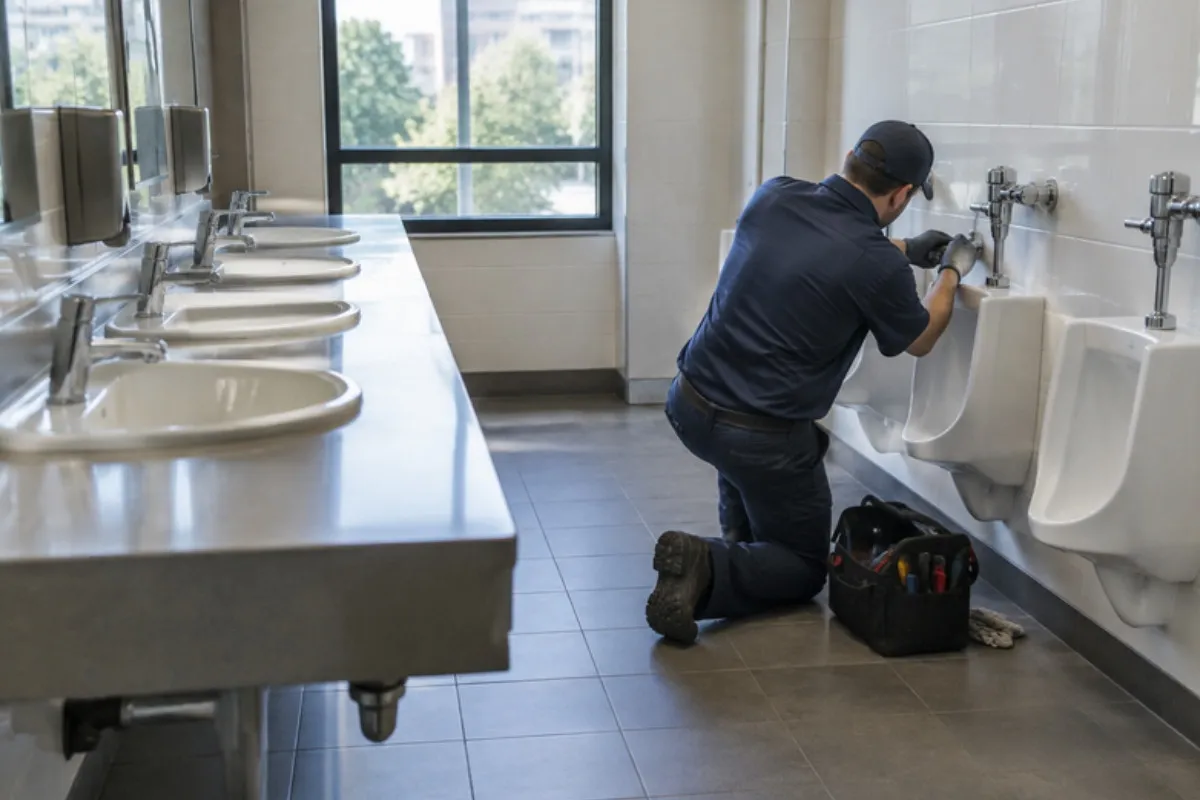
- Flushometer valves, urinals and heavily used restroom fixtures.
- Commercial water heaters and recirculation systems fighting hard water scale.
- Leaks above ceiling tiles or in walls of multi-story buildings.
- Storm-season drain backups at low parking areas and loading docks.
When the problem belongs to the City
For a sewer break beyond the property line, the plumber files a Plumber's Report with the City's Sewer Emergency Line. Water main problems go to the Public Utilities Emergency Hotline at 619-515-3525. If anyone smells gas, get everyone out first, then call 911 and SDG&E at 1-800-611-7343 from a safe place.
What shapes commercial pricing
Cost depends on the type of building, pipe and equipment size, ceiling and chase access, permits, after-hours scheduling, and whether work has to be phased around tenants or business hours.
Commercial Plumbing questions from San Diego homeowners
Does my San Diego restaurant need a grease permit?
What is the difference between an HGI and a GGI?
Do commercial properties need backflow testing every year?
Who handles a sewer break past my property line?
Related plumbing services in San Diego
Helpful guides
Commercial Plumbing in nearby cities and towns
San Diego County
Sources
- City of San Diego Public Utilities: Food Establishment Wastewater Discharge (FEWD) Program
- City of San Diego Public Utilities: Cross-Connection Control and Backflow Prevention
- City of San Diego: Plumbing information (sewer laterals and the Sewer Emergency Line)
- City of San Diego Public Utilities: Emergency Hotline 619-515-3525 (Drinking Water Quality Report)
- SDG&E: Gas safety (gas leak and emergency line)
- City of San Diego Drinking Water Quality Report (water hardness, about 13.8-14.2 grains per gallon from City plants)
Last updated: